Moscenicka Draga from 1100 €
Moscenicka Draga from 1100 €
Moscenicka Draga from 1100 €
Biograd Na Moru from 2440 €
Sveti Filip I Jakov from 1900 €
Moscenicka Draga from 1100 €
Read blog articles about CROATIA
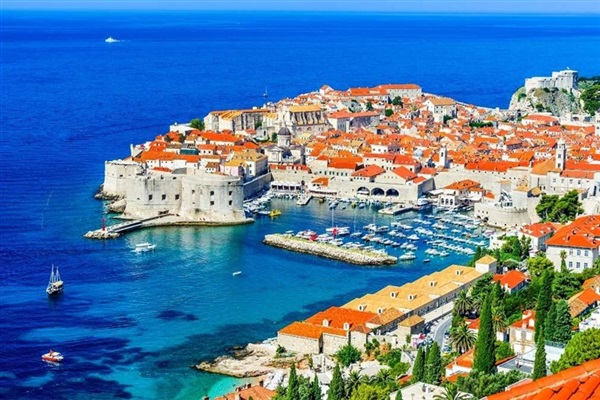
Dubrovnik este unul dintre cele mai frumoase orașe de pe coasta Adriaticii, dar și unul dintre cele mai aglomerate în sezon. Orașul vechi atrage turiști din toată lumea, iar străzile sale înguste, zidurile, scările, piețele și priveliștile spre mare pot deveni greu de savurat atunci când ajungi la orele cele mai încărcate ale zilei. Read more recommendations »

Atât turiștii care se orientează spre minunata Croația ca destinație viitoare de vacanță, dar și cei care au mai vizitat vor rămâne cu amintiri de neuitat, bucurându-se de o varietate amplă de stațiuni, plaje și așezări urbane care pot fi vizitate, cu buget aproximativ redus. Read more recommendations »
Tourist attraction CROATIA
Croatia > Obiective turistice > Sit arheologic

The Roman Forum in Zadar is located in the historic centre of the city, next to the Church of Saint Donatus and the Cathedral of Saint Anastasia, in an area where several important layers of local history meet. It was built during the Roman period, when Zadar, then known as Iader, was an important town on the eastern Adriatic coast. The forum served as a public square, administrative, religious and social centre, with temples, porticoes, official buildings and meeting spaces around it. Today, the ancient complex is preserved through columns, wall fragments, pavements, monument bases and stones integrated into the present urban space. Although it has not survived as a complete Roman square, the forum helps explain the ancient origin of Zadar and the way medieval buildings were later constructed next to or over Roman structures. Read more details »
Croatia > Obiective turistice > Plaje

Pag Island is one of the best-known islands in Croatia, located between northern Dalmatia and the Kvarner area, in a landscape strongly influenced by wind, limestone and the nearby Velebit massif. Much of the island has an arid appearance, with open hills, pale stone, low vegetation and coves with clear water, which makes it different from the more forested Dalmatian islands. Pag is known for its beaches, the town of Pag, the resort of Novalja and Zrće Beach, which is especially associated with nightlife. The island also has a strong cultural identity, connected with Pag lace, traditional salt production and paški sir, the local cheese made from the milk of sheep grazing on the island’s salty pastures. Through its landscape, gastronomy and accessibility, Pag is one of the most varied island destinations in Croatia. Read more details »
Croatia > Obiective turistice > Parcuri si rezervatii naturale

Velebit Nature Park protects the largest mountain massif in Croatia and one of the country’s most important natural areas. Velebit stretches parallel to the Adriatic Sea, between the coast and the inland region of Lika, and its landscape combines limestone ridges, forests, mountain meadows, sinkholes, caves and viewpoints overlooking both the islands and the inland plains. Within this broad protected area are also two national parks, Paklenica and Northern Velebit, which protect sections of exceptional natural value. Velebit Nature Park is important for biodiversity, as the large differences in altitude and the position between the sea and the continent create varied habitats for plants and animals. The area is suitable for hiking, mountain routes, cave visits, scenic drives and observing the karst relief that is characteristic of Croatia. Read more details »
Croatia > Obiective turistice > Parcuri si rezervatii naturale

Paklenica National Park is located on the southern slopes of the Velebit massif, close to Starigrad-Paklenica and the Adriatic coast, in an area where the mountains descend sharply towards the sea. The park is best known for the Velika Paklenica and Mala Paklenica canyons, two deep limestone gorges with steep walls, paths, wooded areas and routes used by hikers and climbers. Velika Paklenica is the most accessible and most visited section, serving as the main entrance to the park and one of the most important climbing areas in Croatia. Beyond the rocky walls, the park includes beech and black pine forests, caves, springs, mountain huts and trails leading towards the higher parts of Velebit. Paklenica is suitable for visitors interested in nature, hiking, geology and outdoor activities, offering a strong contrast with the coast located only a few kilometres away. Read more details »
Croatia > Obiective turistice > Parcuri si rezervatii naturale

Telašćica Nature Park is located in the southeastern part of Dugi Otok Island, in Northern Dalmatia, and protects one of Croatia’s most valuable maritime landscapes. The area is known for Telašćica Bay, a deep and well-sheltered natural harbour long used by sailors. The park includes bays, small islands, high cliffs, pine forests, rocky coastal areas and the saltwater Lake Mir, situated close to the sea. One of the most striking parts of the park is the line of cliffs on the outer coast of the island, where the rocks descend steeply into the Adriatic. Telašćica has ecological value through its marine and terrestrial habitats, as well as tourist value through trails, viewpoints, swimming areas and its proximity to Kornati. The park is important for understanding the Dalmatian island landscape and the relationship between sea, relief and biodiversity. Read more details »
Croatia > Obiective turistice > Parcuri si rezervatii naturale

Kornati National Park protects an important part of the Kornati archipelago, one of the best-known island areas in Croatia, located in the Adriatic Sea between Zadar and Šibenik. The park includes dozens of islands, islets and reefs, many of them marked by rocky terrain, sparse vegetation and sheltered coves used by boats. The landscape is different from the more densely inhabited Dalmatian islands, as Kornati has an arid appearance, with limestone slopes, dry-stone walls, clear water and a strongly indented coastline. The area is visited mainly by boat, through organised excursions from Murter, Zadar, Šibenik or other coastal towns, as well as by travellers sailing independently. The park is important for marine biodiversity, island karst scenery and traces of traditional activities such as grazing, fishing and the division of land through dry-stone walls. Read more details »
Croatia > Obiective turistice > Cetati si castele

St. Nicholas Fortress is located at the entrance to St. Anthony’s Channel, on the maritime route leading towards the city of Šibenik, and is one of the most important Venetian fortifications on the Croatian coast. It was built in the 16th century, during a period when the Republic of Venice was strengthening its positions on the Adriatic and needed to protect Dalmatian harbours from naval attacks. The fortress was erected on the small island of Ljuljevac, in a strategic point that allowed control over access to Šibenik, while its massive, low form, adapted to artillery, shows the changes in military architecture of the period. The structure is built mainly of stone, with sections of brick, and preserves bastions, thick walls, inner courtyards and defensive spaces. St. Nicholas Fortress is included on the UNESCO World Heritage List as part of the Venetian defensive works from the 16th and 17th centuries. Read more details »
Croatia > Obiective turistice > Cetati si castele

Barone Fortress is one of the historic fortifications of Šibenik and stands on a hill from which the old town, the maritime channel, the harbour and the nearby islands can be clearly seen. It was built in the 17th century, during the Ottoman threat, as part of the city’s defensive system, together with St. John’s Fortress and the older fortifications of Šibenik. Its name is connected with Baron Christoph Martin von Degenfeld, a military commander involved in the defence of the city during the Cretan War. The fortress has been restored and adapted for visitors, and today it includes multimedia content and presentations explaining the Ottoman siege and the defensive role of the city. Through its position, Barone is also an important viewpoint, suitable for observing the relationship between Šibenik, the surrounding hills and the Adriatic Sea. Read more details »
Croatia > Obiective turistice > Cetati si castele

St. Michael’s Fortress is one of the most important fortifications in Šibenik and stands on the hill that dominates the old centre of the city. Its position had a clear strategic role, as it allowed control over the harbour, the Šibenik Channel, maritime entrances and the settlement that developed on the slopes below the walls. The fortress has medieval origins, although the fortified area was used and modified in several periods, as the city and its defensive systems changed. The preserved walls, towers and platforms show the military importance of the site, while the views from the fortress include the historic centre, the Cathedral of Saint James, the Adriatic Sea and the nearby islands. Today, the fortress has been restored and also functions as an open-air cultural venue, hosting concerts and events. It is one of the best viewpoints in Šibenik. Read more details »
Croatia > Obiective turistice > Catedrale

The Cathedral of Saint James in Šibenik is one of the most important religious and architectural monuments in Croatia, included on the UNESCO World Heritage List for its artistic and technical value. Construction began in the 15th century and lasted for more than a hundred years, during a period when the city was under Venetian influence and held an important position on the Dalmatian coast. The cathedral is known for being built almost entirely of stone, without the use of traditional wooden structural elements, which gives it a special place in European architecture. Important masters contributed to its construction, including Juraj Dalmatinac and Nikola Firentinac. The façades, dome, apse and the row of sculpted heads on the exterior are among the best-known details of the monument. The cathedral remains the symbol of Šibenik and its main historic landmark. Read more details »
Croatia > Obiective turistice > Manastiri

Krka Monastery is located in Krka National Park, near the village of Kistanje, in the valley of the Krka River. It is one of the most important Orthodox monasteries in Dalmatia and has played a significant role in the history of the Serbian Orthodox community in the region. The complex is dedicated to Saint Michael the Archangel and includes the monastery church, monastic buildings, inner courtyards and spaces connected with religious and educational life. Local tradition links the beginnings of the monastery with the 14th century, and over time the site has been associated with theological schools, manuscripts, liturgical objects and the activity of the Orthodox clergy in Dalmatia. Its position in a quieter part of the park differs from the more visited sections of the Krka River, known for waterfalls. The monastery is visited for its architecture, religious history and connection between the natural landscape and monastic tradition. Read more details »
Croatia > Obiective turistice > Manastiri

Visovac Island is located in Krka National Park, on a lake formed by the Krka River, in a calm area between the waterfalls of Skradinski buk and Roški slap. The island is best known for the Franciscan monastery and church located there, set within a recognisable natural landscape of water, vegetation and surrounding karst slopes. Franciscans have been present on Visovac for several centuries, and the religious complex preserves liturgical objects, books, documents and a small museum collection connected with the history of the site. Access is by boat, through organised trips within Krka National Park, usually from the Stinice, Remetić or Roški slap areas. The island is not large, but it has special importance for the cultural identity of the park, as it brings together the natural landscape of the Krka River and the religious history of Franciscan communities in Dalmatia. Read more details »
Croatia > Obiective turistice > Parcuri si rezervatii naturale

Krka National Park is one of the most visited natural parks in Croatia and is located around the Krka River, near the city of Šibenik. The park is known for waterfalls, lakes, rich vegetation, marked paths and karst landscapes shaped by water in limestone. The best-known point is Skradinski buk, a sequence of waterfalls and travertine barriers surrounded by paths, wooden bridges and viewing points. Other important areas include Roški slap, Visovac Island with its Franciscan monastery, and historic sites along the river. Krka is easier to include in a day trip than many mountain parks, as it has good access from several Dalmatian towns. The park is suitable for walks, photography, boat trips and cultural visits, and its value comes from the combination of water, vegetation, karst relief and historic monuments. Read more details »
Croatia > Obiective turistice > Lacuri si Baraje

The Imotski Lakes are among the best-known natural sights in inland Dalmatia and are located near the town of Imotski. The most important are Blue Lake and Red Lake, both formed in deep karst sinkholes. Blue Lake lies very close to the town centre and can be reached on foot by paths and steps descending towards the water. Its level changes greatly depending on rainfall and season, and in dry years it can almost completely dry out. Red Lake is deeper and is surrounded by steep limestone walls with reddish tones that gave it its name. The area is visited for views, geology, photography and short walks. The Imotski Lakes show a different part of Dalmatia, away from the beaches and historic coastal towns, but closely connected with the karst landscape of the region. Read more details »
Croatia > Obiective turistice > Plaje

Punta Rata Beach is located in the resort of Brela, on the Makarska Riviera, and is one of the best-known beaches in Croatia. The area is appreciated for its clear water, fine pebbles, pine forest close to the shore and position at the foot of the Biokovo massif. The beach has a relatively gentle entry into the water, areas suitable for swimming and shaded spots nearby, making it popular with families, couples and visitors staying in Brela or neighbouring resorts. One of the most recognisable landmarks of the area is Brela Rock, a small rock formation in the sea near the beach, partly covered with pine trees. Punta Rata has a promenade, tourist services, terraces and easy access from the resort. In summer, the area becomes crowded, especially during peak hours, but it remains one of the most representative beaches on the Dalmatian coast. Read more details »
Croatia > Obiective turistice > Monumente

Biokovo Skywalk is a glass viewing platform built in Biokovo Nature Park, above the Makarska Riviera. It is located in the Ravna Vlaška area, at over 1,200 metres above sea level, on the road that climbs towards the summit of Sveti Jure. The platform has a semicircular shape and extends beyond the slope, offering direct views of the steep sides of the Biokovo massif, the coastal towns and the Adriatic Sea. On clear days, the islands of Brač, Hvar and other parts of the Dalmatian coast can be seen. The attraction was created to make one of the park’s most impressive viewpoints more accessible, without turning the area into an urban space. Access is by the narrow road that crosses Biokovo, with clear traffic rules and opening hours set by the park administration. The Skywalk is one of the best-known viewpoints in Dalmatia. Read more details »
Croatia > Obiective turistice > Monumente naturale

The Cetina River Canyon is located near the town of Omiš and is one of the best-known natural areas in central Dalmatia. The Cetina River rises in inland Croatia and reaches the Adriatic Sea after crossing valleys, gorges, wooded areas and limestone cliffs. Near Omiš, its course forms a striking landscape, with high rocks, green-blue water, calm sections and stretches suitable for rafting. The canyon is visited for boat trips, rafting, canyoning, ziplining, walks and viewpoints. The landscape also had historical importance, as the river and gorge offered protection to the town of Omiš and were used in the past by local pirates. Today, the area is one of the most popular destinations for outdoor activities close to the Dalmatian coast. Read more details »
Croatia > Obiective turistice > Cetati si castele

Mirabella Fortress stands above the old town of Omiš, on a steep rock overlooking the meeting point of the Cetina River and the Adriatic Sea. The fortification is also known as Peovica and played an important role in the defence of the medieval town. Its position allowed control over the entrance to the Cetina canyon, the harbour and the coastal routes. For centuries, Omiš was connected with local pirates, who used the difficult terrain and the river for movement and defence. The fortress preserves walls, steps and a lookout tower, and the climb begins directly from the old town. The route is short, but steep in some sections. From the walls, visitors can see Omiš, the mouth of the Cetina River, the Dalmatian coast and the nearby islands. Mirabella is one of the most accessible panoramic points in Omiš. Read more details »
Croatia > Obiective turistice > Cetati si castele

Kamerlengo Castle is one of the most visible fortifications in Trogir and stands at the south-western edge of the old town, next to the waterfront promenade. It was built in the 15th century, during Venetian rule, as part of the city’s defensive system. The fortress protected the harbour, controlled maritime access and strengthened Venetian authority over Trogir. Its thick walls, towers and inner courtyard preserve the appearance of a military structure adapted to a coastal position. The name comes from the Venetian official known as the camerlengo, who was responsible for financial administration. Today, the castle is visited for its architecture, for the views over the old town, the harbour and the island of Čiovo, and for the events held inside during the tourist season. Read more details »
Croatia > Obiective turistice > centre/cartiere vechi

Trogir is one of the best-preserved historic towns on the Dalmatian coast and is located about 30 kilometres west of Split. Its old centre occupies a small island between the mainland and the island of Čiovo, giving it a compact urban structure that is easy to explore on foot. The town has Greek origins, developed during the Roman period and grew significantly in the Middle Ages, especially under Venetian influence. Narrow streets, small squares, walls, palaces and churches form an ensemble included on the UNESCO World Heritage List. The most important monument is the Cathedral of Saint Lawrence, known for the portal carved by Master Radovan. Other landmarks include Kamerlengo Fortress, the City Loggia, the Clock Tower and the waterfront promenade. Trogir is suitable for a visit of a few hours or for a full-day trip from Split. Read more details »
Croatia > Obiective turistice > Sit arheologic

The Salona Ruins are located near the town of Solin, close to Split, and form one of the most important Roman archaeological sites in Croatia. Salona was the capital of the Roman province of Dalmatia and a large urban centre, with walls, gates, streets, baths, a forum, cemeteries, early Christian basilicas and an amphitheatre. The city developed significantly during the Roman period, and its position near the sea and inland routes made it an administrative, military and commercial hub. The site preserves fragments of walls, foundations, columns, sarcophagi and traces of public buildings. Salona is also connected with the beginnings of Christianity in Dalmatia, through bishops, martyrs and early religious complexes. For visitors to the Split area, the ruins offer a broader image of the Roman world that existed before Diocletian’s Palace and the medieval city. Read more details »
Croatia > Obiective turistice > Cetati si castele

Klis Fortress stands on a rocky ridge above the village of Klis, a short distance from Split. Its position had major military importance, as it controlled the passage between the coast and the Dalmatian hinterland. The fortification was used over several centuries, and its history is connected with Croatian kings, conflicts with the Ottomans, Venetian rule and the administrations that controlled this part of the Adriatic coast. The walls, towers and platforms of the fortress follow the shape of the terrain, while from the top there are clear views over the Split area, the town of Solin, Kaštela Bay and the nearby islands. Klis is visited for its history, military architecture and views, as well as for its use as a filming location in Game of Thrones. The fortress remains one of the most important sights near Split. Read more details »
Croatia > Obiective turistice > Muzee

The Meštrović Gallery is one of the most important art museums in Split and is dedicated to the work of the Croatian sculptor Ivan Meštrović. The museum is housed in a villa built for the artist in the Meje area, close to the sea and Marjan Hill. The building was designed as a residence, studio and exhibition space, and later became a memorial gallery. The collection includes sculptures in stone, bronze, wood and plaster, together with drawings, furniture and documents that help explain the artist’s work. Meštrović’s pieces combine religious, historical, mythological and family themes, in a strong style marked by clear volumes and expressive figures. The courtyard, garden and seaside position complete the visit, without making the site only an indoor museum. The gallery is suitable for visitors interested in art, architecture and modern Croatian culture. Read more details »
Croatia > Obiective turistice > Parcuri si rezervatii naturale

Marjan Hill is the main green area of Split and stands on the peninsula west of the historic centre. Covered largely with Mediterranean pine trees, Marjan is used by locals and visitors for walking, running, cycling, photography and quiet breaks away from the busy streets around Diocletian’s Palace. The hill offers several viewpoints over the old town, the harbour, nearby islands and the Adriatic Sea. Along the routes, visitors find old churches, chapels, stone steps, shaded paths and small panoramic areas. Well-known places include the Vidilica viewpoint, the Church of Saint Nicholas, the Church of Saint Jerome and the coastal areas of Bene, Kašjuni and Ježinac. Marjan is not only a park, but an important part of urban life in Split, used for movement, relaxation and orientation within the city’s landscape. Read more details »
Croatia > Obiective turistice > Porturi

The Riva Promenade is one of the best-known pedestrian areas in Split and stands directly in front of Diocletian’s Palace, next to the harbour. The waterfront has become a central space in the life of the city, used every day for walks, meetings, café stops and public events. Its position is important because it connects the historic centre with the sea and the port area, in a place crossed by both locals and visitors. The Riva has palm trees, benches, cafés, restaurants and views of the ships in the harbour, the nearby islands and the southern façades of the old Roman palace. Its present appearance is the result of several phases of development, and the area has been modernised over time to function as an open public space. Today, the Riva is one of the simplest and most recognisable landmarks of Split. Read more details »
Croatia > Obiective turistice > Temple

The Temple of Jupiter in Split stands inside Diocletian’s Palace, a short distance from the Peristyle and the Cathedral of Saint Domnius. It was built at the end of the 3rd century and the beginning of the 4th century, during the construction of the imperial palace. The temple was dedicated to Jupiter, one of the most important gods of Roman religion, and this choice was directly connected with Emperor Diocletian’s status and the symbolism of imperial power. The building is partly preserved, and its interior is known for the stone coffered ceiling, ancient decoration and the compact atmosphere of a Roman space later reused for Christian worship. In the Middle Ages, the temple was converted into a Christian baptistery dedicated to Saint John the Baptist. Today, the monument is visited together with the other landmarks of Diocletian’s Palace and shows the transition from Roman religion to Christianity in Split’s historic centre. Read more details »
Croatia > Obiective turistice > Catedrale

The Cathedral of Saint Domnius is one of the most important monuments in Split and stands inside Diocletian’s Palace, next to the Peristyle. The building occupies the former mausoleum of Emperor Diocletian, built at the end of the 3rd century and the beginning of the 4th century. The transformation of the imperial mausoleum into a Christian cathedral is one of the major changes in the history of the city. The cathedral is dedicated to Saint Domnius, a Christian bishop and martyr associated with ancient Salona. The interior preserves the Roman circular structure, columns, carved elements, altars and works added in later periods. The bell tower, built in Romanesque style and restored over time, is one of the most visible landmarks of Split. Visitors come here for Roman architecture, early Christian history, the connection with Diocletian’s Palace and the view over the old town. Read more details »
Croatia > Obiective turistice > Cladiri istorice

Diocletian’s Palace is the most important historic monument in Split and one of the best-preserved Roman complexes on the Adriatic coast. It was built at the end of the 3rd century and the beginning of the 4th century for the Roman emperor Diocletian, who retired here after his abdication. The palace served as an imperial residence, a fortress and an administrative centre, with massive walls, gates, inner courtyards, ceremonial spaces, temples and residential areas. Over time, after the Roman period, the interior of the palace was gradually transformed into a living town, with houses, churches, squares, shops and narrow streets. Today, Diocletian’s Palace is not only an archaeological site, but the core of Split’s old town. Important landmarks include the Peristyle, the Cathedral of Saint Domnius, the palace cellars, the Golden Gate and the former Temple of Jupiter. Read more details »
Croatia > Obiective turistice > Schituri si Chilii

Blaca Hermitage is one of the most unusual historic sites on Brač Island. The complex stands in a rocky valley, in a secluded place where Glagolitic priests from Poljica found shelter in the 16th century. The first dwellings were arranged near a cave, and over time a church, cells, working spaces, storage rooms and study areas were added. Blaca functioned as a hermitage, an estate, a centre of learning and, later, a place connected with astronomical observation. The last priest of the complex, Nikola Miličević, was interested in astronomy and left behind instruments, books and objects now preserved in the museum. Access is only on foot, either from the island’s interior or from the coast, which keeps the feeling of isolation. Blaca Hermitage is visited for its history, architecture, landscape and the atmosphere of a community that lived for centuries in a difficult setting. Read more details »
Croatia > Obiective turistice > Munti

Vidova Gora Mountain is the highest point on Brač Island and one of the best-known panoramic spots in central Dalmatia. The summit rises above the town of Bol and offers wide views towards Zlatni Rat Beach, the Hvar Channel, Hvar Island and, on very clear days, other Adriatic islands. Access is possible by car, along a road that climbs from the island’s interior, or on foot, using trails chosen by visitors who want a more active experience. The landscape combines the pale stone of Brač, Mediterranean vegetation, pine forests and a sudden opening towards the sea. Vidova Gora is not a difficult mountain in an alpine sense, but in summer the climb requires water, sun protection and attention to heat. The place is suitable for photography, orientation in the landscape and understanding the relief of Brač Island. Read more details »
Information about Croatia

Croatia aims to become the most wanted destination for summer though, tourism here began to grow for several years. Croatia attracts more and more tourists making available to them a fantastic coastline with the Adriatic Sea and crystal clean sea water, but hundreds of islands and a journey in time through old villages, ancient ruins and architecture millennial. Accommodation in hotels, villas and Pensions in Croatia, as well as impeccable service, often accompanied by offers early booking or last minute travel still retains low prices, available to any tourist who dreams of a holiday in Croatia. Croatian cities and resorts with a mild flavor and Venetian architecture invites you medieval monuments, with bars and restaurants where seafood from the Adriatic are in great demand but also where the fun nightlife and partying in night clubs are very popular with younger tourists. Although less accessible by air, land infrastructure is better developed and can be reached quite easily by bus or by car. Local hospitality and tourism as well developed and impeccable services at affordable prices make Croatia a top destination for online bookings among the old continent.
What do I do for a reservation?
Direct Booking is a travel agency that works through an online booking portal. We offer you more than 100,000 travel offers transportation included or just accommodation at the best prices. All our offers are available online and can be accessed by simply using the search engine Search destination or hotel but advanced search filters.
To make a reservation just use search engine Search destination or hotel , set your input data and the offers displayed choose the best offer for you.
To check availability place an order using the Book or More room under tariff shown, so your order will be sent to our suppliers services to confirm availability required farm and later we release invoice.
Order placed will not involve anything financially than later if you want to complete the booking and pay for your booking proforma to become firm.
Once issued invoice may be paid at our office in Bucharest, at any branch of Unicredit Tiriac or BT in the country or online by card.
Accommodation in Croatia, Last Minute Offers in Croatia, 2026 - 2027 offers for Croatia, special offers for Croatia, 2026 - 2027 Croatia offers, travel offers in Croatia, 2026 - 2027 stays in Croatia, tourism in Croatia, holidays and vacations in Croatia, cheap vacations in Croatia, rent villas in Croatia, all inclusive Croatia, last minute Croatia, charters Croatia, apartments Croatia, Croatia bus travel, fly to Croatia, booking Croatia, directbooking.ro Croatia, Croatia accommodation, early booking Croatia, Croatia trip, hotels Croatia individually Croatia


